IBD in Gurugram
| Category |
Inflammatory Bowel Disease |
What is Inflammatory Bowel Disease (IBD)?
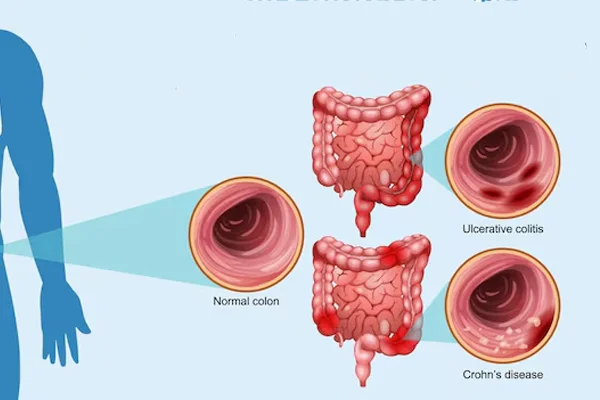
Inflammatory Bowel Disease (IBD) refers to chronic immune-mediated inflammatory disorders affecting the digestive tract. The two major forms of IBD are Ulcerative Colitis (UC) and Crohn’s Disease (CD).
IBD is not simply “gastritis” or “acidity.” It is a chronic inflammatory condition caused by abnormal immune activation in genetically susceptible individuals.
Early diagnosis and advanced treatment are critical to prevent complications, hospitalizations, strictures, fistulas, nutritional problems, and long-term bowel damage.
What is Ulcerative Colitis (UC)?
Ulcerative Colitis is a chronic inflammatory disease that primarily affects the large intestine (colon) and rectum.
Inflammation begins in the rectum and may extend continuously through varying lengths of the colon.
Common Symptoms of Ulcerative Colitis
- Blood in stool
- Frequent loose stools
- Urgency to pass stool
- Abdominal pain
- Mucus in stool
- Weight loss
- Fatigue
What is Crohn’s Disease?
Crohn’s Disease is a chronic inflammatory condition that can affect any part of the digestive tract from mouth to anus.
Unlike UC, Crohn’s Disease may involve deeper bowel layers and can lead to strictures, fistulas, abscesses, and intestinal narrowing.
Common Symptoms of Crohn’s Disease
- Chronic diarrhea
- Abdominal pain
- Weight loss
- Perianal disease
- Fever
- Bloating
- Nutritional deficiencies
- Fatigue
Extraintestinal Manifestations of IBD
IBD may affect organs outside the intestine as well. These are called extraintestinal manifestations.
- Joint pains and arthritis
- Skin disorders
- Eye inflammation
- Liver and bile duct disease
- Anemia
- Bone weakness
- Nutritional deficiencies
Advanced Diagnosis of IBD
- Colonoscopy & Ileoscopy: Direct visualization and biopsy of intestinal inflammation.
- Advanced Endoscopy: Detailed mucosal assessment and dysplasia surveillance.
- Fecal Calprotectin: Non-invasive marker of intestinal inflammation.
- CT / MRI Enterography: Evaluation of small bowel disease and complications.
- Intestinal Ultrasound: Real-time bowel inflammation monitoring.
- Histopathology: Microscopic confirmation of inflammatory bowel disease.
Advanced Treatment Options for IBD
- 5-ASA therapy (Mesalamine)
- Steroid therapy
- Immunomodulators
- Biologic therapy
- Targeted small molecule therapy
- Nutritional therapy
- Endoscopic management of strictures
- Multidisciplinary IBD care
Biologic & Advanced Therapies
Modern IBD management increasingly utilizes biologic therapies and targeted immune treatments to control inflammation and prevent long-term bowel damage.
These include anti-TNF agents, anti-integrin therapies, IL inhibitors, and newer targeted molecules tailored to disease severity and patient profile.
Why Specialized IBD Care Matters
IBD requires long-term monitoring, disease activity assessment, medication optimization, nutritional management, and surveillance for complications.
A specialized IBD center provides:
• Advanced diagnostic expertise
• Access to biologics and advanced therapies
• Intestinal ultrasound monitoring
• Personalized treatment strategies
• Multidisciplinary disease management
• Long-term complication prevention
Frequently Asked Questions
Is IBD curable? IBD is a chronic condition, but modern treatment can achieve long-term remission and excellent quality of life.
Can IBD increase cancer risk? Long-standing inflammation may increase colon cancer risk, which is why surveillance colonoscopy is important.
Do all patients need biologics? No. Treatment depends on disease severity, location, complications, and response to previous therapy.
Can diet alone cure IBD? Diet is important but usually not sufficient alone to control active inflammation.
Comprehensive evaluation and treatment available for:
• Ulcerative Colitis
• Crohn’s Disease
• Bloody diarrhea
• Chronic abdominal pain
• Perianal disease
• Weight loss
• Refractory bowel symptoms
• Advanced biologic therapy management